
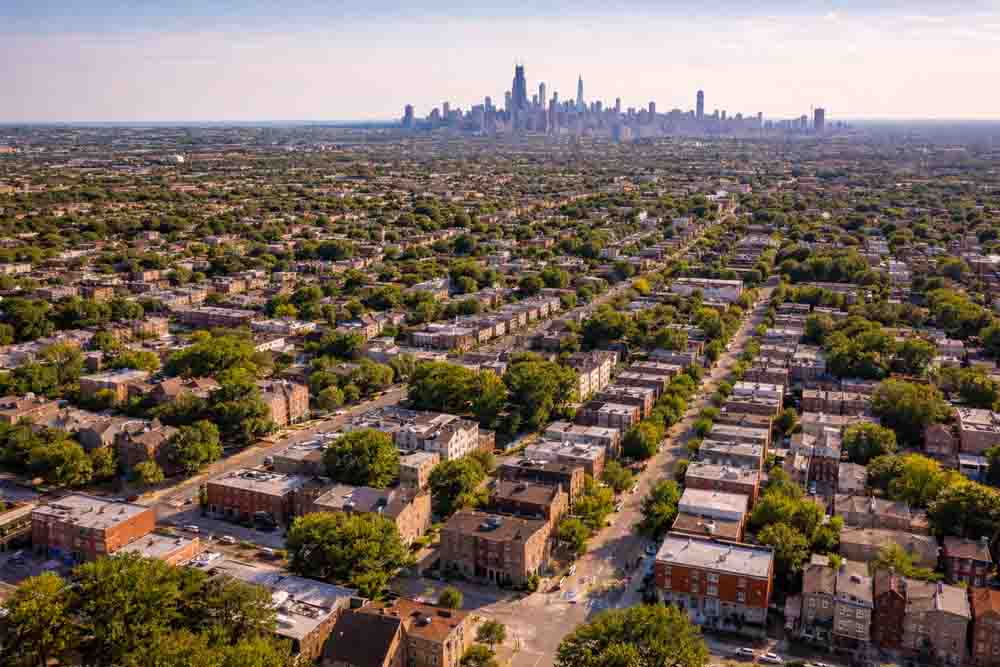
For decades, Chicago’s South Side has been defined by both its rich cultural heritage and its uneven economic development. But in 2026, something different is happening.
Not one project. Not one strategy. But a multi-layered transformation where massive tech investments, transit expansion, housing redevelopment, and community-driven initiatives are converging at once.
The result is a dramatic shift unfolding on Chicago’s South Side, highlighted by the sampling below that illustrates the many ways this multi‑layered transformation is emerging.
From Steel to Silicon: The Rise of a South Side Tech Corridor
The Illinois Quantum & Microelectronics Park (IQMP) is turning the former U.S. Steel South Works site into a next-generation research hub. What was once one of the largest steel plants in the world is now being redeveloped into a campus focused on quantum computing and advanced microelectronics. (IQMP)
This is more than symbolic. It represents a fundamental economic pivot:
- Industrial past → high-tech future
- Manufacturing → computing and research
- Local footprint → global innovation race
This project could position Chicago as a serious player in the global quantum economy—and place the South Side at its center.
South Side Transit as a Catalyst: The Red Line Extension
CTA Red Line Extension: Infrastructure is often the invisible engine of economic growth—but here, it’s front and center. The Red Line Extension will stretch rail service 5.5 miles south from 95th to 130th Street, with construction beginning in 2026. (CTA)
Its impact goes far beyond transportation:
- Expands access to jobs, schools, and healthcare
- Unlocks land for transit-oriented development
- Attracts retail, housing, and investment along the corridor
Historically, transit expansion has shaped Chicago’s growth. In 2026, it’s poised to do so again—this time for communities long left at the edge of the system.
A Cultural Anchor with Global Reach
Obama Presidential Center: Opening in June 2026, the Obama Presidential Center is one of the most anticipated cultural projects in the country. (ArchDaily)
The 19-acre campus will include:
- A museum and library
- Public gathering spaces
- Athletic and community facilities (Obama Foundation)
But its real impact lies beyond architecture. It serves as a long-term anchor for economic activity, drawing tourism, supporting local businesses, and reshaping the identity of Chicago south side neighborhoods.
Housing, Corridors, and Community-Led Change
Across the South Side, smaller-scale investments are filling in the gaps:
- Mixed-income housing developments
- Revitalized commercial corridors
- Local retail and small business support
- Community-driven planning initiatives
These efforts ensure that growth is not just large—but layered and lived-in. They address the everyday realities:
- Where people shop
- Where they live
- Where neighborhood life actually happens
URB, inc. embraces this new chapter for Chicago’s South Side
For decades, URB has recognized the promise and potential of Chicago’s South Side neighborhoods and in 2026, we’re fully embracing and contributing to the positive momentum being generated.