
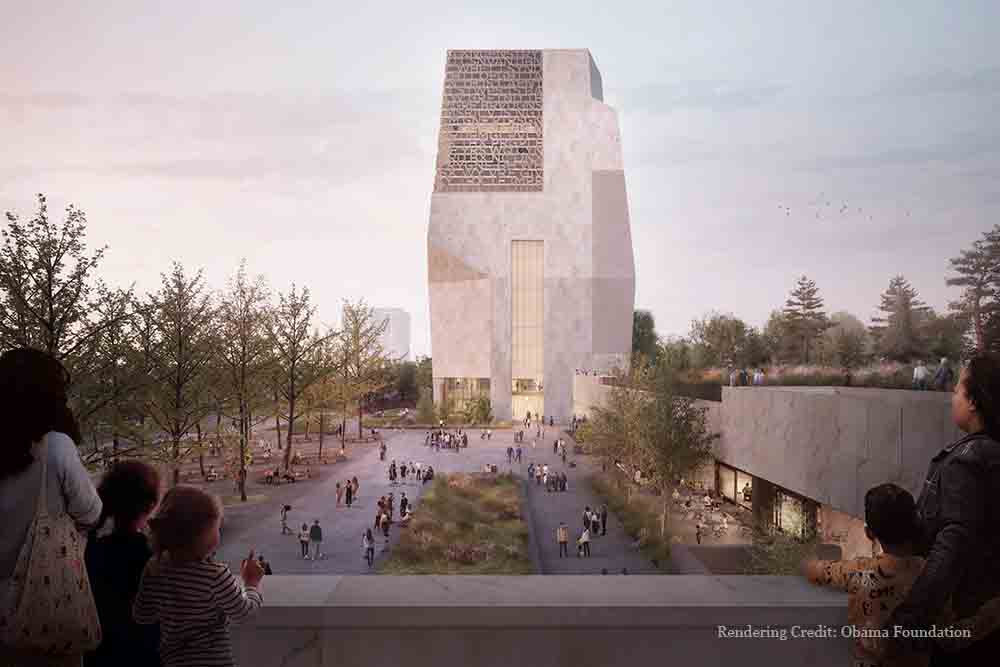
Politics aside, the opening of the Obama Presidential Center (OPC) this year is projected to deliver substantial economic benefits to Chicago’s South Side. Independent assessments show a clear picture of both major upside and important community considerations.
According to the OPC Economic Impact Assessment, the Center is expected to attract 625,000 to 760,000 visitors annually. This level of tourism is projected to generate significant new spending at local businesses, supporting restaurants, retail, transportation, and hospitality across South Side neighborhoods.
The assessment also estimates that the Obama Presidential Center will support 1,407 South Side jobs during construction and 2,175 ongoing jobs annually once open, spanning construction, operations, programming, and visitor services. Over the first decade, the Center is projected to generate $2.1 billion in economic impact for South Side communities, including $339 million during construction and $177 million annually after opening.
At the same time, community leaders and residents highlight that long‑term prosperity is strongest when growth is guided by thoughtful, inclusive planning. They see real opportunity in efforts that support local hiring, strengthen small businesses, and ensure that longtime and future residents can thrive alongside new investment.
Together, the data and community perspectives point to the Obama Presidential Center becoming a powerful catalyst for South Side prosperity. The projected economic activity, job creation, and increased foot traffic offer meaningful opportunities for local businesses, homeowners, and future investors.
Growth guided by equity, accountability, and community‑driven development has benefits that can extend far beyond the OPC itself, strengthening neighborhood stability, supporting residents, and creating pathways for shared opportunity across the South Side. In this way, the Obama Presidential Center has the potential not only to spark economic momentum but to help shape a more vibrant, inclusive future for the communities that have long anchored this part of Chicago.